Drill Results Map — Utah
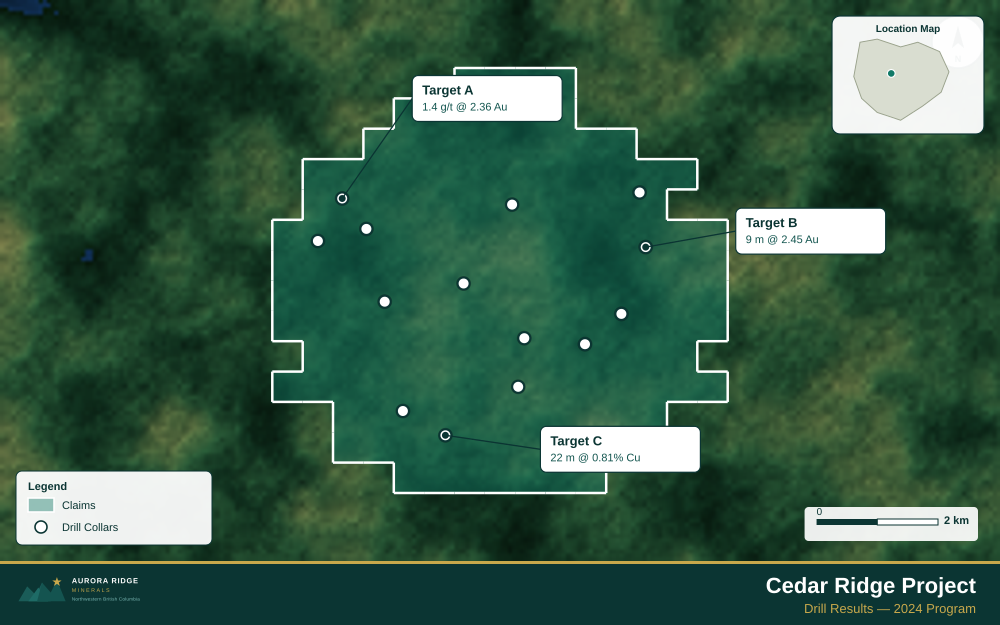
Utah — home to Bingham Canyon, the world's largest man-made excavation and a premier copper-gold producer — is a prime target for junior exploration companies. Here's how to create a professional drill results map using Exploration Maps in 15–30 minutes.
About Mining in Utah
Utah is home to Bingham Canyon — the world's largest man-made excavation and one of the largest copper mines in the world — as well as a long history of gold and silver production.
Key minerals: copper, gold, silver, molybdenum, coal, potash. Notable deposits: Bingham Canyon, Copperton, Park City, Mercur. Mining districts: Bingham Canyon, Oquirrh Mountains, Park City, San Juan.
The Bureau of Land Management (BLM) administers mineral rights in Utah. Claim data is accessible through BLM MLRS (Mineral & Land Records System).
Getting Mining Data for Utah
| Portal | Formats | Notes |
|---|---|---|
| BLM MLRS (Mineral & Land Records System) | MLRS reports + map viewer (claims by legal description) | Utah BLM mining claims use UTM Zone 12N (EPSG:32612). The Utah Division of Oil, Gas and Mining also administers coal and industrial mineral leases under a separate system — hardrock unpatented mining claims are the BLM MLRS domain. Verify your commodity type to use the correct database. |
How to Create a Drill Results Map for Utah
For a full step-by-step guide to drill results maps, see How to Make a Drill Results Map.
- Import your drill collar CSV (columns: hole ID, latitude, longitude, depth, assay)
- Assign the Drillholes layer role
- Import the property claims boundary as GeoJSON
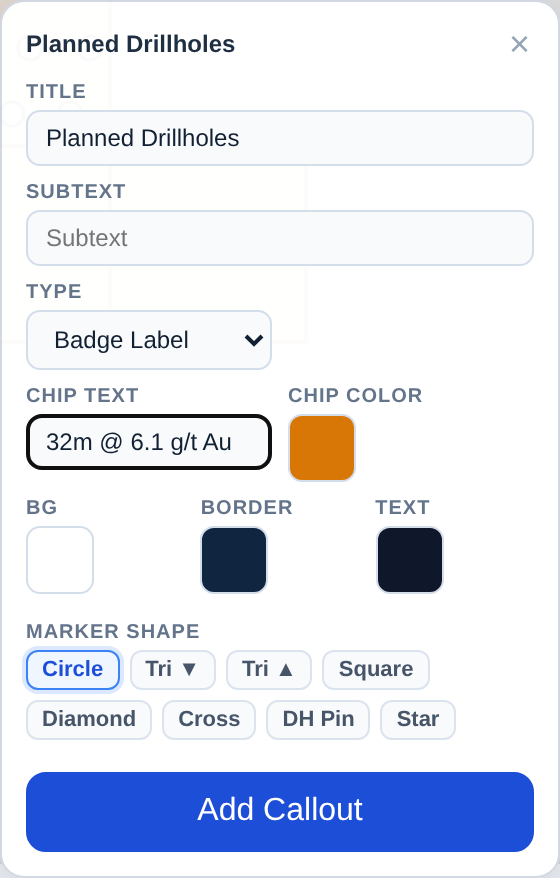
- Add callout labels to key holes showing hole ID and best intercept
- Use Badge Label type to highlight the highest-grade holes
- Configure the title with program name and date
- Set the Landscape 16:9 ratio for news release figures
- Export as PNG at 2× for email and PDF for the news release attachment
Tip for Utah: If your property is in the Oquirrh Mountains near Bingham Canyon, zoom out enough to include the recognizable open pit as a landmark — investors immediately understand the geological context and infrastructure setting of properties within sight of an operating world-class mine.
Recommended Settings for Utah
- Basemap: Light or Satellite
- Design theme: Investor — Navy & White
- Export format: PNG at 2× for investor presentations, PDF (Letter or A4) for NI 43-101 reports
- Coordinate system: Ensure source data is in WGS84 (EPSG:4326)
Common Use Cases in Utah
- Exploration news releases
- NI 43-101 technical reports
- Investor day presentations
- Analyst briefings