Drill Results Map — Alaska
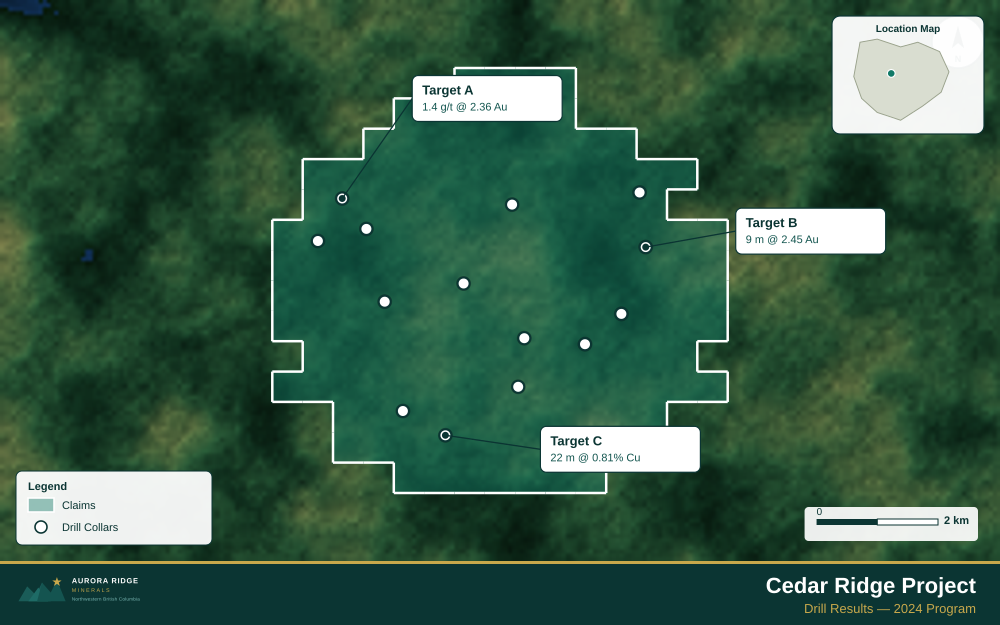
Alaska — home to some of the world's largest undeveloped gold, copper, and zinc deposits — is a prime target for junior exploration companies. Here's how to create a professional drill results map using Exploration Maps in 15–30 minutes.
About Mining in Alaska
Alaska hosts some of the largest undeveloped mineral deposits in the world, including Donlin Gold and Pebble, alongside active gold, zinc, and copper producers.
Key minerals: gold, copper, zinc, silver, coal, platinum. Notable deposits: Pebble, Fort Knox, Donlin Gold, Greens Creek, Red Dog. Mining districts: Fairbanks, Juneau, Nome, Seward Peninsula.
The Alaska Department of Natural Resources administers mineral rights in Alaska. Claim data is accessible through Alaska DNR Online Mapping.
Getting Mining Data for Alaska
| Portal | Formats | Notes |
|---|---|---|
| Alaska DNR Online Mapping | Shapefile, KML | Alaska DNR uses NAD83 geographic coordinates. The Mining Claims portal allows polygon export by claim group. Alaska spans UTM Zones 5–9 — ensure all boundary layers use the same coordinate reference system before merging, as zone mismatches cause significant positional errors across the state's vast extent. |
How to Create a Drill Results Map for Alaska
For a full step-by-step guide to drill results maps, see How to Make a Drill Results Map.
- Import your drill collar CSV (columns: hole ID, latitude, longitude, depth, assay)
- Assign the Drillholes layer role
- Import the property claims boundary as GeoJSON
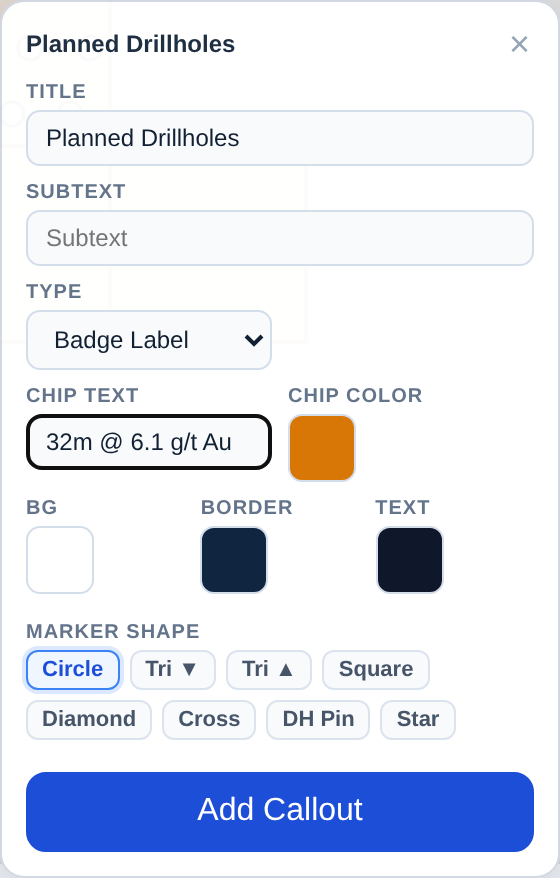
- Add callout labels to key holes showing hole ID and best intercept
- Use Badge Label type to highlight the highest-grade holes
- Configure the title with program name and date
- Set the Landscape 16:9 ratio for news release figures
- Export as PNG at 2× for email and PDF for the news release attachment
Tip for Alaska: Large Alaska deposits like Donlin Gold and Pebble span many tens of square kilometres — zoom out to show the full project outline and use a regional inset showing the nearest hub community (Bethel, Fairbanks) and access route to communicate the remote, fly-in logistics immediately.
Recommended Settings for Alaska
- Basemap: Light or Satellite
- Design theme: Investor — Navy & White
- Export format: PNG at 2× for investor presentations, PDF (Letter or A4) for NI 43-101 reports
- Coordinate system: Ensure source data is in WGS84 (EPSG:4326)
Common Use Cases in Alaska
- Exploration news releases
- NI 43-101 technical reports
- Investor day presentations
- Analyst briefings