Drill Results Map — Alberta
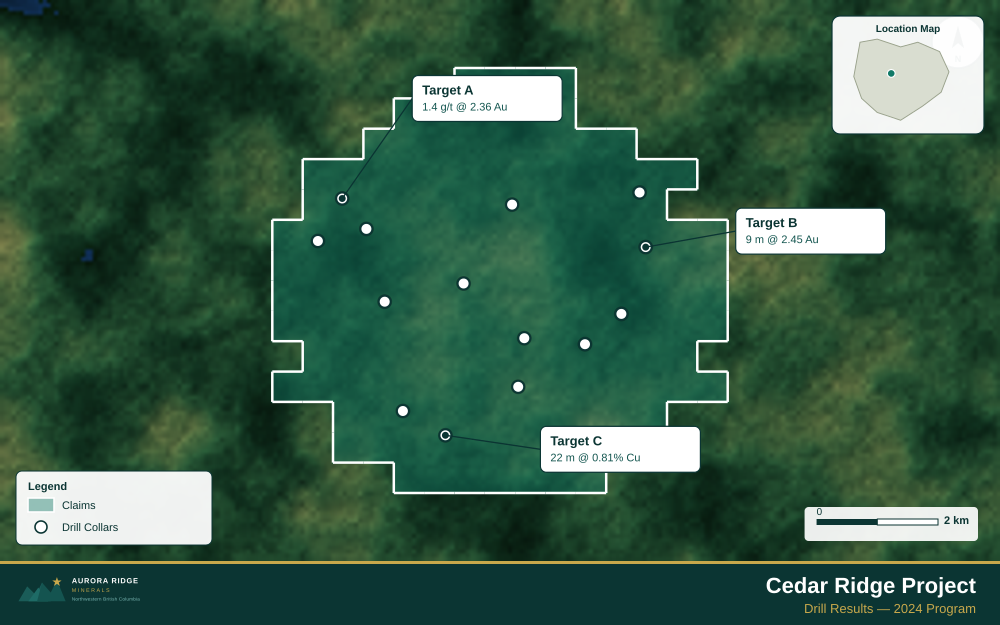
Alberta — an emerging gold and critical minerals jurisdiction with world-scale oil sands infrastructure — is a prime target for junior exploration companies. Here's how to create a professional drill results map using Exploration Maps in 15–30 minutes.
About Mining in Alberta
Alberta is best known for its oil sands but hosts significant coal, potash, and emerging gold exploration in the Rocky Mountain foothills.
Key minerals: coal, oil sands, potash, salt, silica, gold. Notable deposits: Athabasca Oil Sands, Grande Cache Coal, Kananaskis Gold. Mining districts: Peace River, Foothills, Rocky Mountain.
The Alberta Ministry of Energy and Minerals administers mineral rights in Alberta. Claim data is accessible through Alberta Mineral Rights.
Getting Mining Data for Alberta
| Portal | Formats | Notes |
|---|---|---|
| Alberta Mineral Rights | Shapefile, CSV | Alberta mineral disposition data uses NAD83 geographic coordinates. Boundaries in many older records are described in Dominion Land Survey (DLS) legal format — confirm your GeoJSON is correctly projected before importing to avoid east-west offset errors. |
How to Create a Drill Results Map for Alberta
For a full step-by-step guide to drill results maps, see How to Make a Drill Results Map.
- Import your drill collar CSV (columns: hole ID, latitude, longitude, depth, assay)
- Assign the Drillholes layer role
- Import the property claims boundary as GeoJSON
- Add callout labels to key holes showing hole ID and best intercept
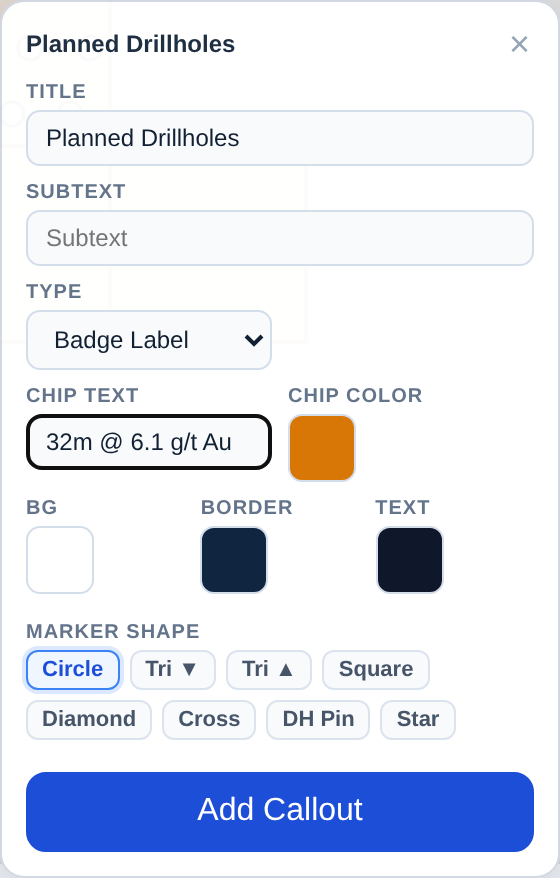
- Use Badge Label type to highlight the highest-grade holes
- Configure the title with program name and date
- Set the Landscape 16:9 ratio for news release figures
- Export as PNG at 2× for email and PDF for the news release attachment
Tip for Alberta: Alberta's Rocky Mountain foothills gold properties are typically compact — use a 1:25,000 to 1:50,000 scale with the Topographic basemap to show the ridgeline terrain that defines drill access and the regional infrastructure context investors expect.
Recommended Settings for Alberta
- Basemap: Light or Satellite
- Design theme: Investor — Navy & White
- Export format: PNG at 2× for investor presentations, PDF (Letter or A4) for NI 43-101 reports
- Coordinate system: Ensure source data is in WGS84 (EPSG:4326)
Common Use Cases in Alberta
- Exploration news releases
- NI 43-101 technical reports
- Investor day presentations
- Analyst briefings