Mining Claims Map — Wyoming
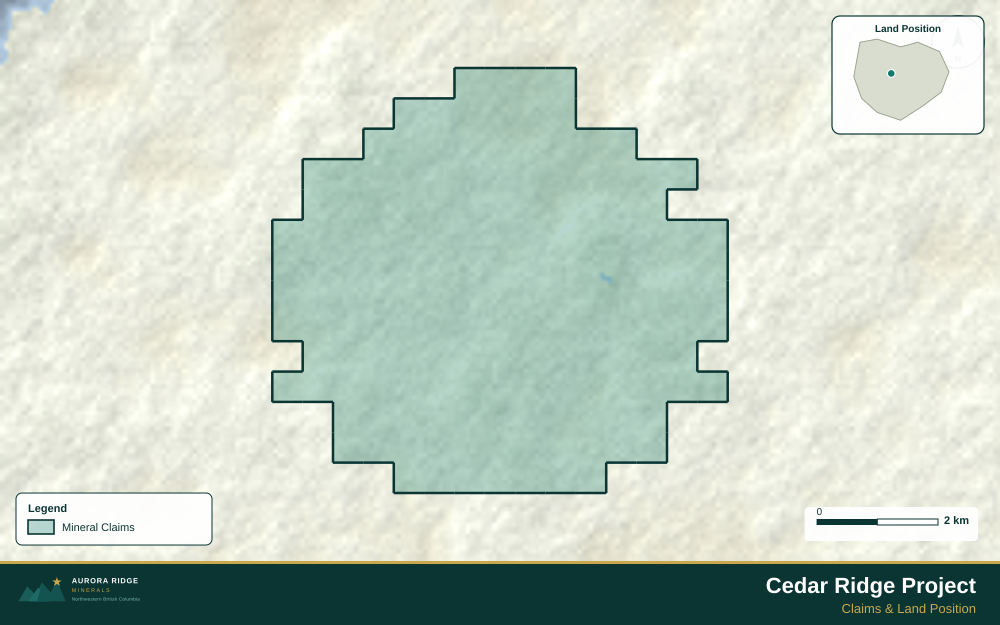
Wyoming — the largest US coal producer and a key state for uranium exploration and trona mining — is a prime target for junior exploration companies. Here's how to create a professional mining claims map using Exploration Maps in 15–30 minutes.
About Mining in Wyoming
Wyoming is the largest coal-producing state in the United States and hosts major trona and uranium deposits, with growing gold exploration in its mountain ranges.
Key minerals: coal, trona, uranium, gold, bentonite. Notable deposits: Powder River Basin Coal, Green River Trona, Gas Hills Uranium. Mining districts: Powder River Basin, Green River Basin, Sweetwater.
The Bureau of Land Management (BLM) administers mineral rights in Wyoming. Claim data is accessible through BLM MLRS (Mineral & Land Records System).
Getting Mining Data for Wyoming
| Portal | Formats | Notes |
|---|---|---|
| BLM MLRS (Mineral & Land Records System) | MLRS reports + map viewer (claims by legal description) | Wyoming BLM hardrock mining claims use UTM Zone 13N (EPSG:32613). Powder River Basin coal leases are managed separately through BLM's coal leasing program and are not in MLRS — contact the BLM Wyoming State Office for coal lease spatial data. |
How to Create a Mining Claims Map for Wyoming
For a full step-by-step guide to mining claims maps, see How to Make a Mining Claims Map.
- Import your claims data as a GeoJSON or CSV file
- Assign the Claims layer role to apply standard styling automatically
- Add roads and water layers for geographic context
- Select a basemap — Light for technical reports, Satellite for investor decks
- Configure the title block with project name, company, and map date
- Upload your company logo
- Set the export ratio and frame your map
- Export as PNG (presentations) or PDF (reports)
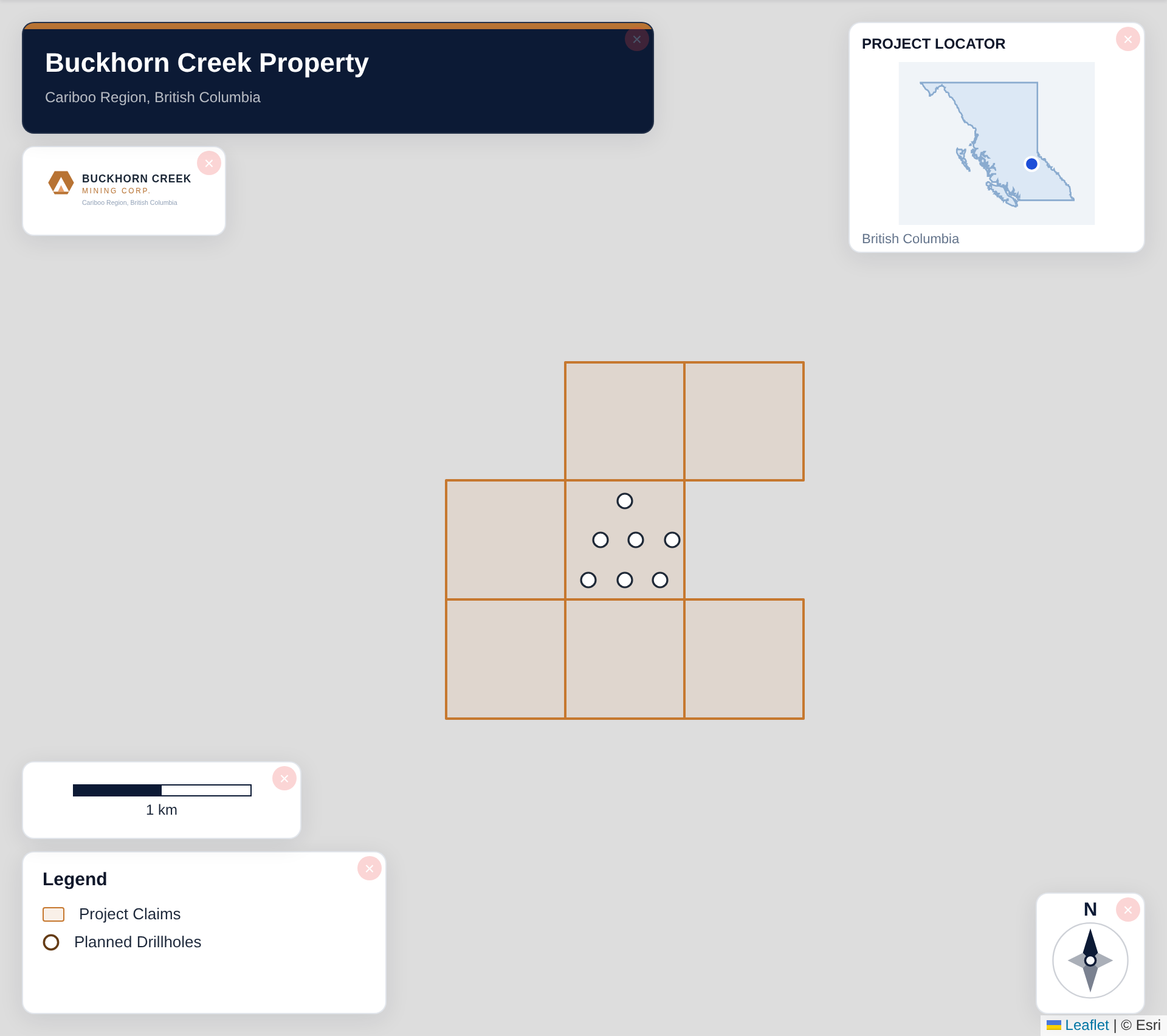
Tip for Wyoming: Wyoming uranium in-situ recovery (ISR) properties use a network of widely-spaced wellfields — show production wells and monitoring wells as distinct point symbol layers, and add a polygon outline of the licensed wellfield boundary area so the full project footprint is clear to regulatory reviewers.
Recommended Settings for Wyoming
- Basemap: Light or Satellite
- Design theme: Investor — Navy & White or Technical — Sharp Borders
- Export format: PNG at 2× for investor presentations, PDF (Letter or A4) for NI 43-101 reports
- Coordinate system: Ensure source data is in WGS84 (EPSG:4326)
Common Use Cases in Wyoming
- NI 43-101 technical reports
- Investor presentations
- News release figures
- Property acquisition packages
- Regulatory filings