Mining Claims Map — Saskatchewan
Saskatchewan — home to the Athabasca Basin, the world's richest high-grade uranium district — is a prime target for junior exploration companies. Here's how to create a professional mining claims map using Exploration Maps in 15–30 minutes.
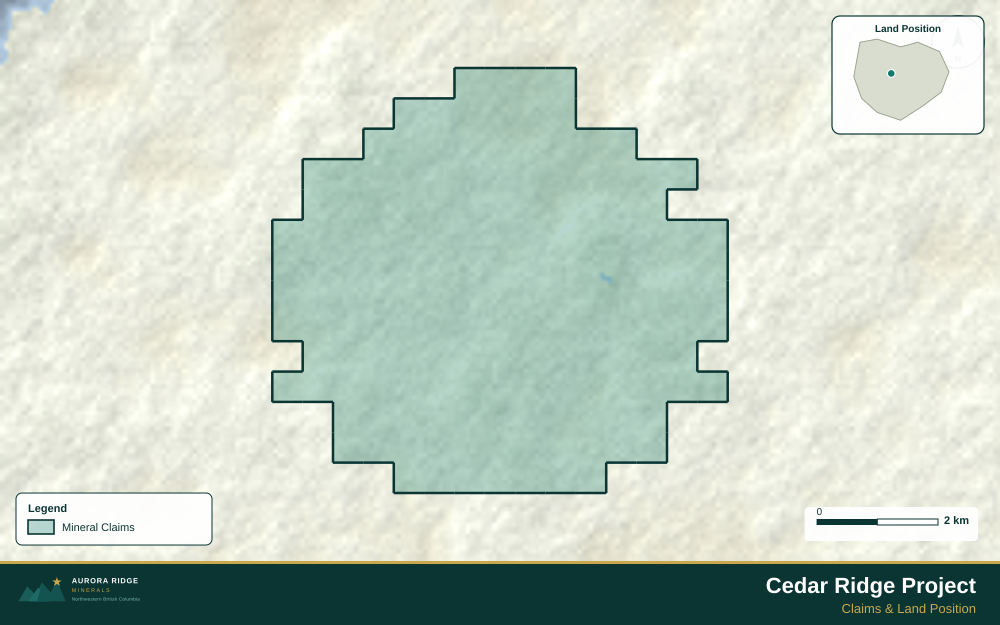
About Mining in Saskatchewan
Saskatchewan's Athabasca Basin is the world's richest uranium district, while the province also hosts world-class potash deposits and growing gold exploration.
Key minerals: uranium, potash, gold, copper, nickel, lithium. Notable deposits: Cigar Lake, McArthur River, Key Lake, Roughrider. Mining districts: Athabasca Basin, La Ronge, Flin Flon.
The Saskatchewan Ministry of Energy and Resources administers mineral rights in Saskatchewan. Claim data is accessible through MARS (Mineral Administration Registry Saskatchewan).
Getting Mining Data for Saskatchewan
| Portal | Formats | Notes |
|---|---|---|
| MARS (Mineral Administration Registry Saskatchewan) | Shapefile, KML, PDF | Saskatchewan mineral dispositions are administered through MARS, operated by ISC. Exports use Saskatchewan Transverse Mercator (EPSG:3400) or NAD83 geographic — convert to WGS84 (EPSG:4326) at mapshaper.org before importing. |
How to Create a Mining Claims Map for Saskatchewan
For a full step-by-step guide to mining claims maps, see How to Make a Mining Claims Map.
- Import your claims data as a GeoJSON or CSV file
- Assign the Claims layer role to apply standard styling automatically
- Add roads and water layers for geographic context
- Select a basemap — Light for technical reports, Satellite for investor decks
- Configure the title block with project name, company, and map date
- Upload your company logo
- Set the export ratio and frame your map
- Export as PNG (presentations) or PDF (reports)
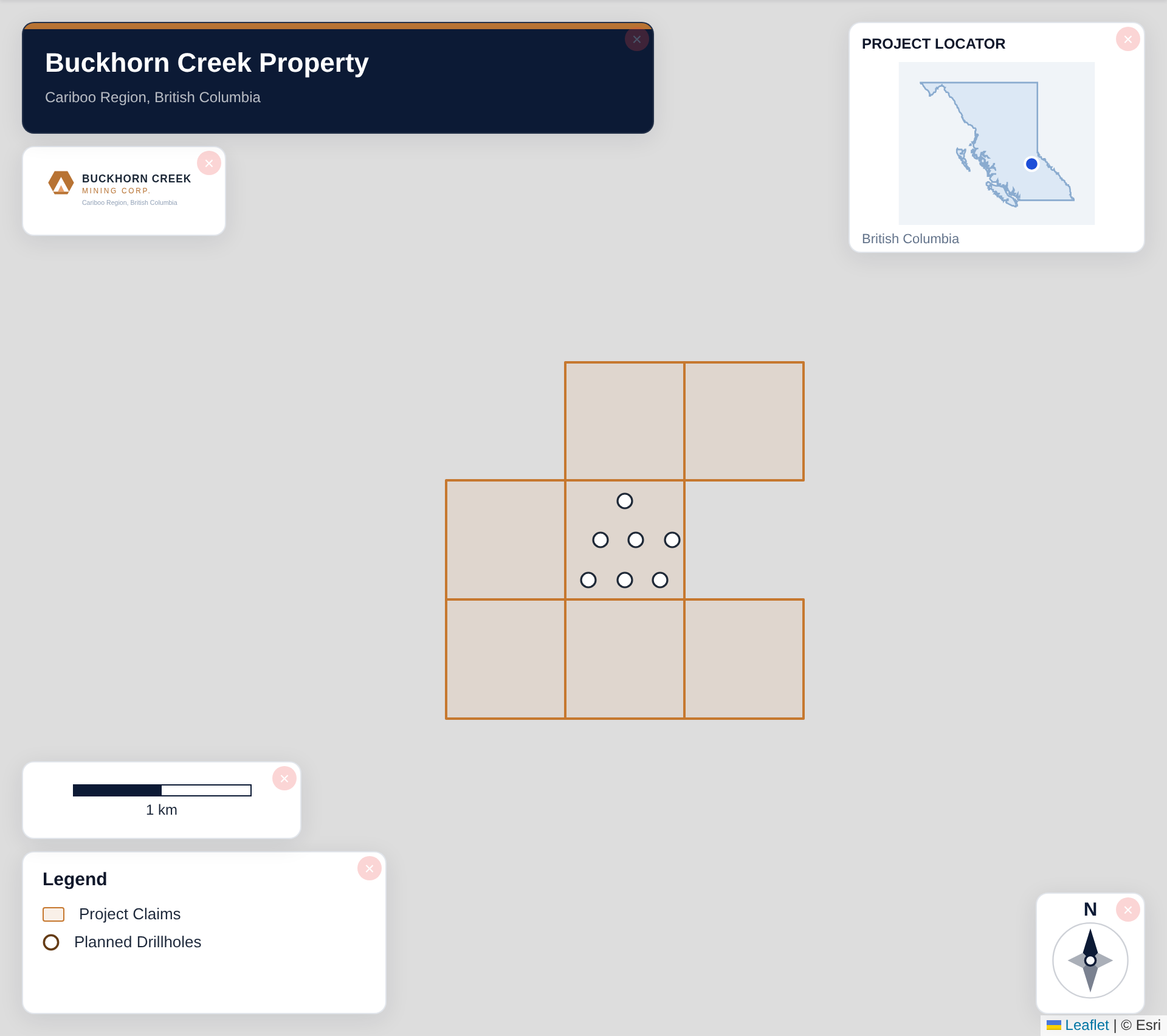
Tip for Saskatchewan: Athabasca Basin uranium properties are typically remote and accessible only by floatplane — use the Satellite basemap to show the lake-dotted Shield terrain, and add a distance ring from the nearest community (Uranium City, La Loche) to communicate logistics immediately.
Recommended Settings for Saskatchewan
- Basemap: Light or Satellite
- Design theme: Investor — Navy & White or Technical — Sharp Borders
- Export format: PNG at 2× for investor presentations, PDF (Letter or A4) for NI 43-101 reports
- Coordinate system: Ensure source data is in WGS84 (EPSG:4326)
Common Use Cases in Saskatchewan
- NI 43-101 technical reports
- Investor presentations
- News release figures
- Property acquisition packages
- Regulatory filings